Mangrove Bay Realty · 2026 investor guide
Pinellas County short-term rentals, city by city
Pinellas County has no single short-term rental law. Each city sets its own minimum stay, and unincorporated land uses the county Certificate of Use. Check the parcel first, then open that city's guide. I'm Troy Nowak, broker of Mangrove Bay Realty (BK3436609).
Last verified: October 22, 2026. Parcel-level screen, not a legal opinion.

The three checks that come before revenue
- Jurisdiction: confirm whether the parcel is inside a city or in unincorporated Pinellas. The mailing address is not proof.
- Public rule: use the map and table to find the minimum stay, zoning limits, and local compliance path.
- Private and property limits: read condo or HOA documents, then price flood, wind, liability, parking, and the fallback rental plan.
- Guest cap: The cap sets the revenue ceiling, not the bed count. Largo allows 1 guest per 150 gross square feet of air-conditioned space and needs 1 off-street parking space per 3 guests. Unincorporated Pinellas allows 2 guests per bedroom plus 2, up to 10, with 1 parking space per 3 occupants.
- Fallback: Model a furnished 30-plus-day rental and a long-term rental. If both fail, nightly usually will not save the deal.
- Buying an operating rental: Permits mostly do not transfer. In unincorporated Pinellas the buyer applies for a new Certificate of Use within 30 days of the sale.
Rule tiers in plain English
- Mostly nightly-friendly
- Indian Rocks Beach, Indian Shores, Kenneth City, Pinellas Park, and Tarpon Springs (Resort Residential) still need DBPR licensing, taxes, and a local business tax receipt.
- Restricted districts
- Treasure Island, St. Pete Beach, Gulfport, Largo, and others allow nightly stays only in specific zoning. Do not rely on the city name alone.
- 31+ day or blocked
- Clearwater and much of St. Pete residential stock need monthly minimums or limited-stay paths. Underwrite furnished midterm or resale if nights fail.
Pinellas short-term rental map by city
Static color-coded map of all 25 Pinellas jurisdictions. Green = mostly nightly-friendly; amber = restricted districts; blue = 30+ day minimum; red = prohibited. Always confirm the exact parcel with the city contact.

All Pinellas jurisdictions (25)
Screening table only. Confirm the exact parcel and zoning with the city contact before you write an offer.
| City / jurisdiction | Tier | Min stay | Rule summary | Guide |
|---|---|---|---|---|
| Indian Rocks Beach | Nightly OK | Nightly | Nightly allowed in all residential districts (with licensing + inspection) | Deep dive |
| Indian Shores | Nightly OK | Nightly | No STR restrictions on length of stay | — |
| Kenneth City | Nightly OK | Nightly | No STR length-of-stay restrictions | — |
| Pinellas Park | Nightly OK | Nightly | No STR length-of-stay restrictions | Deep dive |
| Tarpon Springs | Nightly OK | Nightly | Tourist homes allowed in Resort Residential district | — |
| Pinellas County (Unincorporated) | Restricted | Nightly | Allowed with registration, occupancy caps, and quiet hours | Deep dive |
| Gulfport | Restricted | 30 days outside permitted zones | Nightly allowed in specific transient-accommodation districts; 30-day minimum elsewhere | — |
| Treasure Island | Restricted | Nightly in permitted zones | Tourist dwellings permitted in CG, RFM-30, RFH-50, PR-MU districts only | — |
| St. Pete Beach | Restricted | Varies by district | Nightly limited; RM and Pass-A-Grille Overlay allow short stays ≤3 times/year | — |
| Redington Shores | Restricted | Varies by district | Prohibited in most residential; RM-15 allows <1 month | — |
| Safety Harbor | Restricted | Conditional, ≤6 weeks per occupant | "Tourist homes" allowed in R-3 zone as conditional use only | — |
| Largo | Restricted | Nightly | Allowed but heavily regulated: occupancy caps, parking minimums, annual inspection | Deep dive |
| Clearwater | 30+ Days | 31 days | 31-day minimum in all residential districts | Deep dive |
| St. Petersburg | 30+ Days | 30 days (or 3x/year ≤30-day exception) | 1-month minimum, OR <1 month max 3 times per 365 days | Deep dive |
| Seminole | 30+ Days | 30 days | Transient accommodation uses prohibited in residential since 2005 | — |
| Dunedin | 30+ Days | 90 days | 90-day minimum in residential; permitted only in specific commercial districts | — |
| Madeira Beach | 30+ Days | 6 months (R-1) / 3 months (R-2) | Prohibited in R-1 (<6 months) and R-2 (<3 months) | — |
| North Redington Beach | 30+ Days | 90 days | 90-day minimum in all residential districts | — |
| Redington Beach | 30+ Days | 181 days | Prohibited <181 days in Districts 2 & 3 | — |
| Belleair | 30+ Days | 7 months | Minimum 7-month lease term; max 2 tenancies per 12 months | — |
| Belleair Beach | 30+ Days | 3 months | 3-month minimum in RL District II | — |
| Belleair Bluffs | 30+ Days | 3 months | 3-month minimum; max 4 tenancies per 12 months | — |
| South Pasadena | 30+ Days | Long-term lease only | Transient/tourist dwellings prohibited in single-family residential | — |
| Oldsmar | 30+ Days | Long-term lease | Boarding houses & B&Bs prohibited as home occupations | — |
| Belleair Shore | Prohibited | N/A | No rentals allowed — residential-only (62 private homes) | — |
Use the official file before you make an offer
A countywide graphic cannot prove that one parcel is legal for nightly rentals. These official starting points answer the first questions, then the municipality and association documents finish the job.
- Unincorporated Pinellas Certificate of Use
Minimum stay: under 30 days is allowed with a Certificate of Use when you rent the whole home more than three times a year. A room rental while you live there is exempt. Checked October 22, 2026. Site guide: Unincorporated Pinellas Airbnb rules.
- Largo short-term rental rules
The city page sets maximum occupancy at 1 guest per 150 gross square feet of living space and one off-street parking space per three guests. It treats more than three stays a year of 30 days or less as a short-term rental. Checked October 22, 2026. Site guide: Largo Airbnb rules.
- Indian Rocks Beach vacation rental registration
Beginning October 1, 2026, new and renewal Vacation Rental Registration is $600 per unit on the city page. Checked October 22, 2026. Site guide: Indian Rocks Beach Airbnb rules.
- St. Petersburg transient accommodation handout
City of St. Petersburg rules for stays under 30 days are in the transient accommodation handout, not in a countywide zoning map. Checked October 22, 2026. Site guide: St. Pete and Gulfport STR rules.
- Clearwater code document
Confirm Clearwater's residential minimum stay on the city's published code document before you underwrite nightly income. Checked October 22, 2026. Site guide: Clearwater short-term rental rules.
- Confirm city vs. unincorporated
Pinellas County's address tool identifies the government that serves the parcel.
- Unincorporated STR program
Review the current Certificate of Use, inspection, occupancy, parking, and application rules.
- Florida vacation-rental licensing
Check the state DBPR lodging license path after local use is confirmed.
- Largo short-term rental rules
Guest and parking caps, inspections, and the city's permit path for vacation rentals.
Pinellas County places buyers mix up
These planning visuals help frame the conversation: unincorporated pockets, broadly friendlier jurisdictions, and restricted areas with narrow exceptions. Use the verified map and table on this page for the current rule tier.
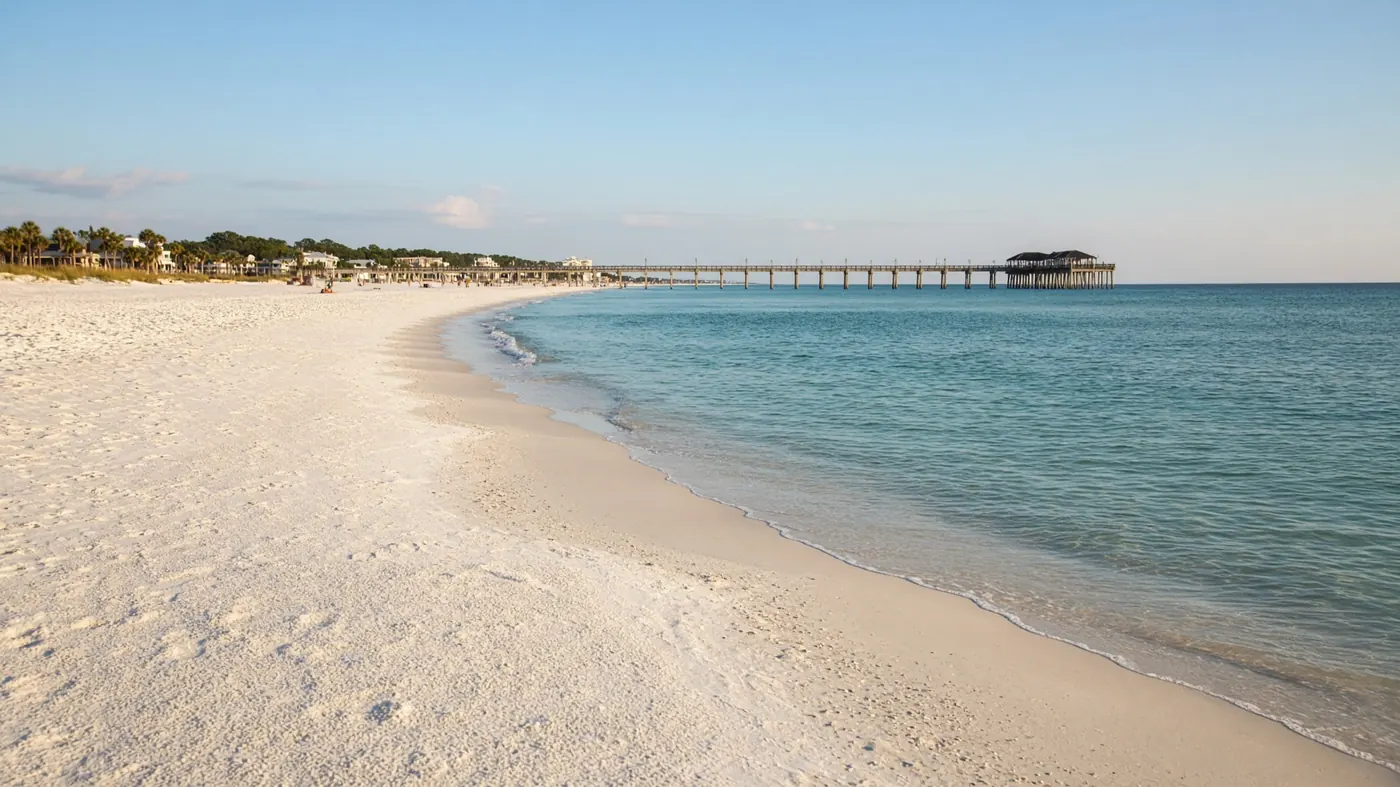
Clearwater Beach is not the whole county
A beach photo is not a zoning map. Clearwater's own code document is linked below. Confirm the parcel before you use a beach comp.
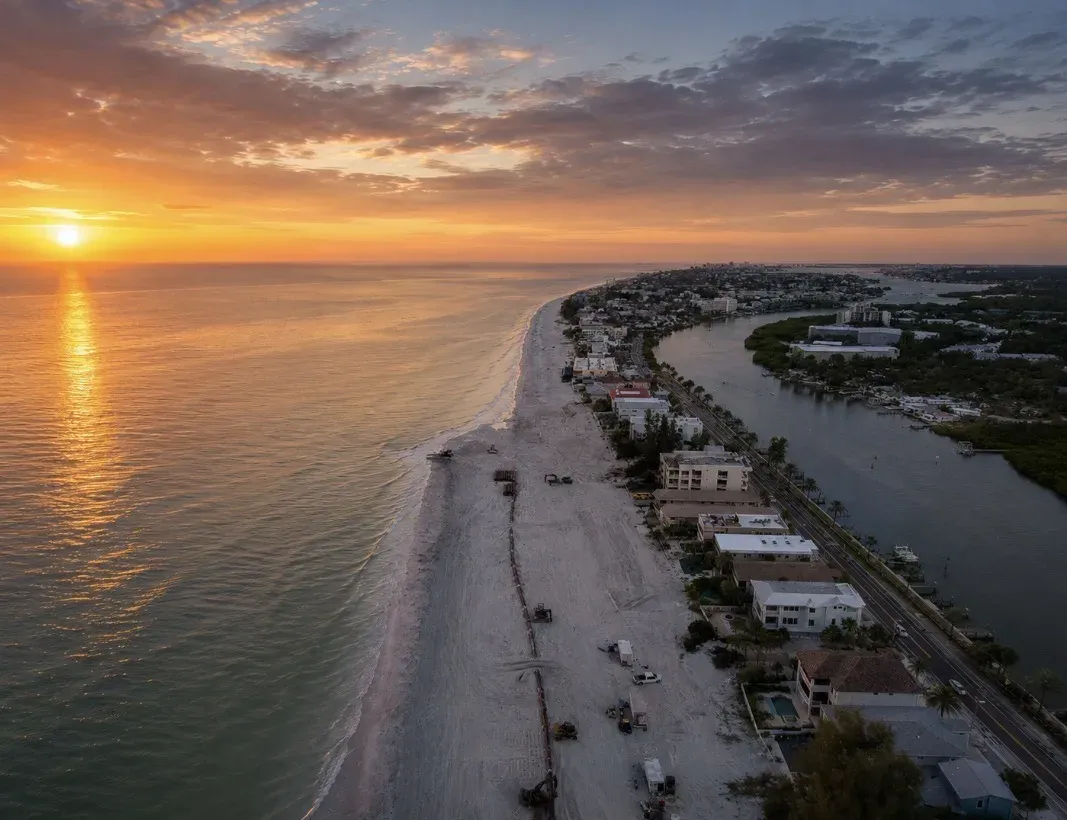
Indian Rocks Beach publishes its own registration
The city vacation rental page, checked October 22, 2026, lists a $600 annual registration for new and renewal units beginning October 1, 2026.
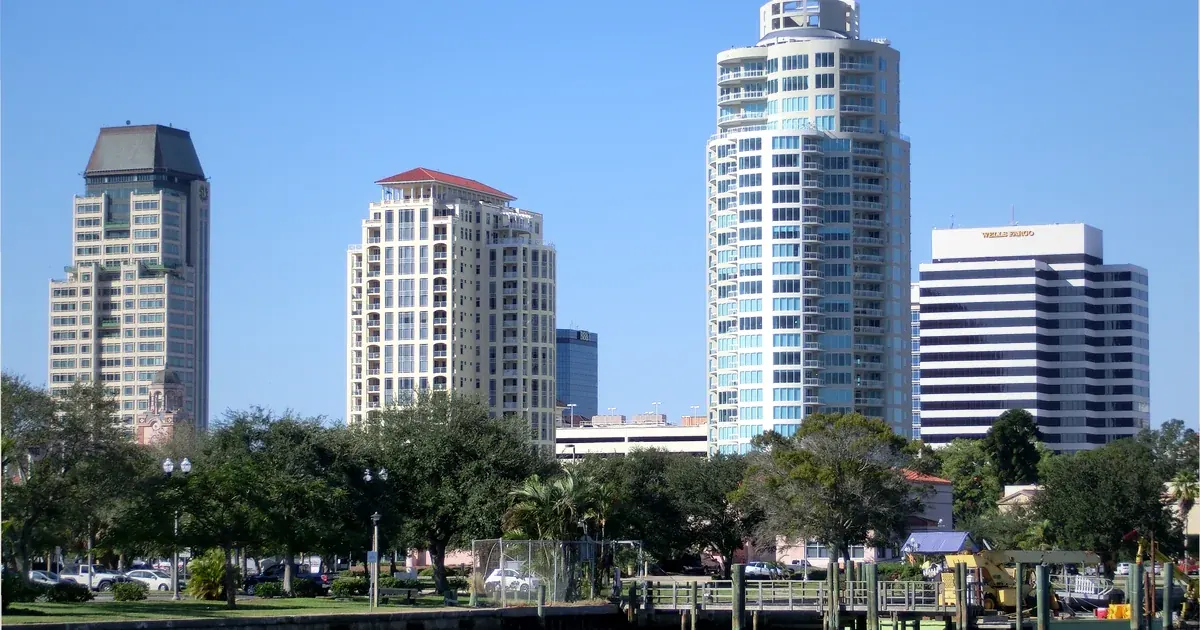
St. Petersburg is a city rule, not a county rule
Downtown towers still follow the City of St. Petersburg transient handout, plus the condo documents. The county map is only the first screen.
Real photos of Pinellas places. They are not government zoning maps and do not establish legal rental rights, city limits, or parcel eligibility.
FAQ
What is the Pinellas County short-term rental zoning map?
It is a first screen for 25 Pinellas jurisdictions, not a permit. Confirm the parcel, open the market guide for that place, then use the address rules check. Troy Nowak (BK3436609) reviews the stay, the HOA, and flood before you offer. Mailing city labels are often wrong.
Is this an Airbnb map for Pinellas County?
It is a zoning and rules map for short-term rentals, not a guest booking map. Use it to see whether nightly Airbnb is allowed before you underwrite revenue. For guest search, use Airbnb. For buy-side diligence, use this map plus city guides linked in the table.
Does Clearwater allow short-term Airbnb rentals?
No. The City of Clearwater requires a minimum 31-day stay in residential districts. Beach exceptions need documented grandfather rights.
Does St. Petersburg allow short-term rentals?
St. Pete is not a free nightly market in residential zones. Stays under one month are limited by the city's three-stay and transient-use rules. Gulfport and exact zoning change the answer, so confirm before you offer.
Do I need a license to operate a short-term rental in Pinellas County?
Yes: Florida DBPR vacation rental license, local business tax receipt, Florida sales tax registration, and Pinellas tourist development tax. Unincorporated Pinellas also needs a Certificate of Use.
What taxes do Pinellas County STR guests pay?
About 13% combined on bookings under 6 months: 6% Pinellas tourist development tax + 7% Florida sales tax. Platforms may remit only part of it; operators remain responsible for the rest.
Which market guide should I read?
Match the government on the parcel, not the mailing city. The related list on this page links every STR market guide, the address rules check, and the contact form. If the parcel is unincorporated, use the county Certificate of Use guide.
Where do I start before I buy a Pinellas short-term rental?
Confirm whether the parcel is inside a city or in unincorporated Pinellas. Then open that market guide and run the address rules check. Troy Nowak (BK3436609) will tell you if the stay you modeled is legal before you offer. Use the contact form.
Where can I run an Airbnb / short-term rental in Pinellas County?
There is no countywide yes. St. Petersburg caps stays under 30 days at three per 365 days on residential property. Clearwater residential zoning requires 31 days or one calendar month, whichever is less. Unincorporated Pinellas uses the county Certificate of Use. Use the market-guide list on this page, the Pinellas STR map, or the address rules check before you underwrite nightly income.
Can I buy an operating Airbnb in Pinellas?
Only when the city or county still allows that stay length after you close. A live listing is not the rule. St. Petersburg lets a residential property take under-30-day rentals at most 3 times per 365 days. Clearwater residential zoning generally requires 31 days or one calendar month, whichever is less, unless the parcel has documented lawful nonconforming or transient use. Ask the city for a written answer on that address before you underwrite the current bookings.
What are the best Pinellas County neighborhoods for real estate investment in 2026?
Depends on strategy. Short-term rentals: rules vary by city and zoning district, so verify with the city. Largo, for example, permits them in residential land use designations if they meet its code, and Indian Rocks Beach requires city vacation rental registration. Long-term hold: Old Northeast and Historic Kenwood in St. Pete for walkability and tight inventory. Value/flip: Crescent Lake, Allendale, and parts of Pinellas Park. Luxury appreciation: Snell Isle and Sand Key, with real flood and insurance work. Compare flood zones and typical home values on the St. Pete neighborhood guide.
Related: Free STR rules check by address · Pinellas flood zone guide · Pinellas investor guide · Contact Troy · Anna Maria Island market guide · Indian Rocks Beach Airbnb rules · Largo Airbnb rules · Pinellas Park Airbnb rules · Unincorporated Pinellas Airbnb rules · Clearwater STR rules · St. Pete and Gulfport STR rules · Home value / CMA
Review STR Deal
Send the address to Troy Nowak before you write the offer.
Troy Nowak, broker of Mangrove Bay Realty (BK3436609), checks the parcel, the legal stay, insurance, flood, and whether the current bookings transfer. Use the contact form.
One conversion path
Send Troy the address on the contact page.
Use the same contact form for STR checks, valuations, buyer questions, and seller conversations. Successful submissions go to the thank-you page for clean Google Analytics conversion tracking.
FAQ
Pinellas short-term rental questions
What is the Pinellas County short-term rental zoning map?
This hub is the county screen: which Pinellas cities and unincorporated pockets generally allow nightly stays, which need a 31-day or longer minimum, and where exceptions sit in high-demand beach towns. Confirm the parcel on the Pinellas County Property Appraiser site (pcpao.gov) and the Pinellas address tool (pinellas.gov/my-neighborhood) before you underwrite income.
Who can help me buy or sell a short-term rental in Pinellas County?
Troy Nowak at Mangrove Bay Realty. He is a Florida real estate broker (BK3436609) who represents STR buyers and sellers across Pinellas County, and he owns and manages his own short-term rentals in Pinellas.
Does the mailing address tell me which STR rules apply?
No. A Clearwater or St. Petersburg mailing address can sit in unincorporated Pinellas County, and a Seminole address may not be inside the City of Seminole. Check the parcel on the Pinellas County Property Appraiser site (pcpao.gov) to see which jurisdiction controls it.
Does Clearwater allow short-term Airbnb rentals?
Most residential Clearwater is a 31-day market, not a nightly one. Beach exceptions need documented transient, hotel, or grandfathered use. Read the Clearwater STR rules page on this site, then send Troy the address.
Can a condo or HOA be stricter than the city?
Yes. Association documents can require longer leases than the local ordinance does, so read the condo or HOA rules as well as the city or county rule before you count on nightly income.
What should I send Troy for an STR review?
The address and the asking price. Troy checks the jurisdiction, zoning, minimum stay, HOA or condo rules, flood zone and insurance, then tells you whether the property is worth deeper diligence.